How to Train Your Team on Wholesale-to-Retail Decisioning Without Losing a Week
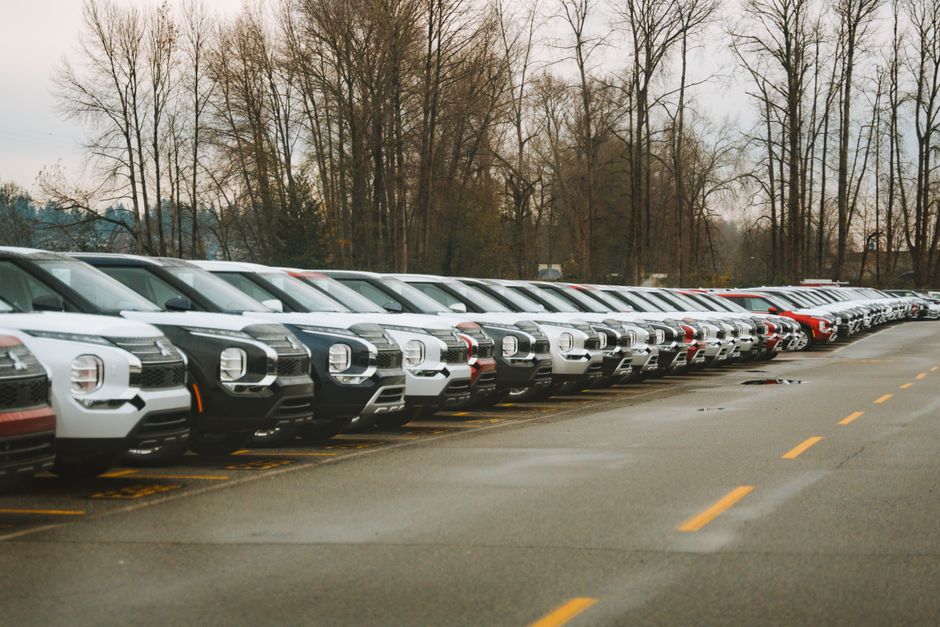
Back in 1995, most independent used car dealers made their buy-or-pass decision on the lot in about fifteen minutes, armed with nothing but a Kelley Blue Book printout and gut instinct. Today, you've got market data, pricing tools, reconditioning cost estimates, and aging projections at your fingertips. And yet, we still see dealers losing an entire week while a new team member learns to make those calls correctly. That's not a training problem. That's a process problem.
The dealers who get this right have built a decision framework that new hires can follow on day two, not day ten. It doesn't require them to develop market intuition overnight. It just requires a clear, repeatable system that anyone with basic automotive knowledge can execute with confidence.
Why Wholesale-to-Retail Decisioning Breaks New Team Members
Here's the gap most dealerships don't see coming: a wholesale buyer or acquisition manager needs to make a judgment call that combines three different skill sets at once.
- Vehicle condition assessment (mechanical, cosmetic, hidden defects)
- Market data interpretation (what similar vehicles are selling for locally)
- Reconditioning cost estimation (what it'll actually cost you to get it front-line ready)
Stack those together and ask someone to do it in twelve minutes while bidding against four other dealers on a remote internet auction, and you've got a recipe for either missed buys or underwater inventory that takes ninety days to move.
The reason onboarding typically drags is that dealers expect new team members to absorb all three skill sets through observation. "Ride along with Tom for a week and you'll get it." Tom's got fifteen years of pattern recognition burned into his brain. You can't download that in five days by watching him nod at a transmission dipstick.
But you can teach the system.
Build a Written Decision Tree (Not a Lecture)
Start here: write down exactly what your top performer looks at, in order, before they make an offer.
This is a one-page checklist. Not a fifty-page manual. Not a video series. A single laminated sheet that lives in their pocket or on their phone.
Here's what a real decision tree looks like for a typical used car buy:
- Check the auction listing and photos for obvious disqualifiers. Missing engine bay photos? Accident history? Title issue? Stop. Don't spend time on this vehicle.
- Run the VIN through your title and lien check tool. Clean title in hand? Move forward.
- Pull market pricing for this exact model, trim, mileage, and condition in your DMA. Is there ceiling price you'd never exceed? Write it down before you get emotionally attached.
- Estimate reconditioning costs. Say you're looking at a 2017 Honda Pilot with 105,000 miles and a minor paint scuff on the driver's door, worn brake pads, and a hazy windshield. You're realistic about the cost: $800 for paint correction, $600 for brakes, $200 for glass, $400 for detailing labor. That's $2,000 in front-end gross already committed.
- Do the math backwards. Local market shows similar Pilots selling for $24,500. Your cost basis (wholesale price plus reconditioning) needs to leave you with at least $3,200 in front-end gross after sales costs. That means your maximum offer is $21,300.
- Make the decision. Is the asking price below your max? Yes? Bid. No? Pass. Don't negotiate against yourself.
A new team member can follow this checklist on a Tuesday morning and not make a catastrophic mistake.
Teach the Math, Then Teach the Pattern
Here's the thing about reconditioning cost estimation: it's not magic, and it's not opinion. It's arithmetic.
You know what a timing belt costs at your shop. You know what a full detail runs. You know your paint correction rate. Your team member needs to know those numbers too, because they're not guessing at reconditioning costs. They're pulling from a real cost sheet that you've already built out (and yes, this is exactly the kind of workflow Dealer1 Solutions was built to handle, where your estimates pull actual labor rates and parts costs from your shop data).
The pattern part comes later, after they've done this ten times.
That's when they start recognizing that a 2018 RAV4 with 92,000 miles and a clean auction history almost always costs less than $1,200 to recondition, so they don't overthink it. That's when they see that 2007 Corollas with high mileage almost always hit aging problems before they hit margin targets, so they pass automatically. That pattern recognition is what separates a solid buyer from a great one. But you can't install it in day two. You have to let it develop through repetition.
The job of your onboarding process is to make sure they don't torpedo the dealership's cash flow while that pattern recognition is developing.
Create a Pricing-and-Aging Reality Check
One more tool new team members need: visibility into how long inventory typically sits before it sells in your market.
Pull a report of your last sixty sold units. For each vehicle model and age bracket, calculate the average days to sale. A 2022 Highlander probably moves in twenty-two days. A 2015 Accord probably takes thirty-eight days. A 2010 Jeep Wrangler might sit for fifty-six days because every mile of age on a Wrangler makes it slower to turn.
Now tie that number to your cost basis. If you're carrying a vehicle for fifty-six days at a 4% monthly finance charge, you're paying $280 in carrying costs alone on a $15,000 investment. That has to come out of your front-end gross. A new team member who doesn't know that Jeep takes fifty-six days to turn will overpay on the buy side and blow through your margin before it even hits the lot.
This is the conversation that prevents aging disasters.
Market data changes weekly, sometimes daily depending on seasonality. The dealers with the sharpest acquisition teams run monthly training refreshers on pricing trends and aging patterns for their specific market segment. It takes ninety minutes and prevents thousands in margin loss from stale assumptions.
Give Them Real-World Scenarios to Practice
Before you turn a new team member loose on actual wholesale opportunities, walk through five recent purchases you made and have them reverse-engineer your decision.
Pull a vehicle your team bought three weeks ago. Show them the auction listing price, the photos, the reconditioning costs you incurred, and the selling price. Ask them: "Would you have bought this at that price?" Make them work through your decision tree and justify their answer.
Do this with one buy and one pass. One vehicle that turned out great and one that aged longer than expected. When they can articulate why you made each decision using your framework, they're ready to make their own calls.
This sounds simple. Most dealerships skip it because it feels slower than just having someone observe. It's not. A two-hour reverse-engineering session compresses a week of trial-and-error learning into something actionable.
Document Your Decision Framework Once, Use It Forever
The real time-saver is this: once you've built your decision tree, cost sheet, aging benchmarks, and pricing guidelines, you've got repeatable training material that works for everyone you hire going forward.
You're not reinventing the wheel every time someone new joins your acquisition team. You're handing them the exact same roadmap your best buyer uses, which means your second hire gets trained twice as fast as your first, and your third hire gets trained faster still. The investment in documenting the system pays dividends for years.
And here's the honest part: this documentation also forces you to standardize decisions across your team. One person doesn't buy aggressively while another plays it safe. Everyone's using the same ceiling prices, the same reconditioning cost estimates, the same aging assumptions. Your front-end gross becomes predictable instead of dependent on who happened to work that day.
That consistency shows up directly in your CSI and hold-back rates.
The dealerships that crack this problem typically see new acquisition team members making independently sound decisions by day three or four, not day ten. They also tend to have tighter inventory turns, lower aging percentages, and more stable front-end gross because everyone's operating from the same data set instead of gut feel.
Your old-timer Tom is still valuable. But he's not the system anymore. He's just one person executing the system better than anyone else, and now you can teach it to the next person without losing a week.
The One Thing Not to Automate Yet
Here's where I'm going to take a position: don't try to replace wholesale-to-retail decisioning with software that makes the call for you. Not yet. Not until your team understands the reasoning behind each buy.
Algorithmic buying tools are getting smarter, and someday they might work. But right now, a new team member who doesn't understand why a vehicle makes sense will override a computer's recommendation the moment it contradicts their gut. You want to build judgment first, then add automation as a safety check.
What you should automate is the data gathering part. Pull real-time market pricing. Aggregate your reconditioning costs. Surface your aging benchmarks. Give your team instant access to the numbers they need to make a decision. Tools like Dealer1 Solutions can give your team a single view of every vehicle's status and cost, so they're not hunting through five different screens for the information they need to decide.
The decision itself? That stays human.
And now it's a trained human, not just an experienced one.